
Dambulla Cave Temple
Sri Lanka's Largest Cave Temple Complex
Dambulla Cave Temple
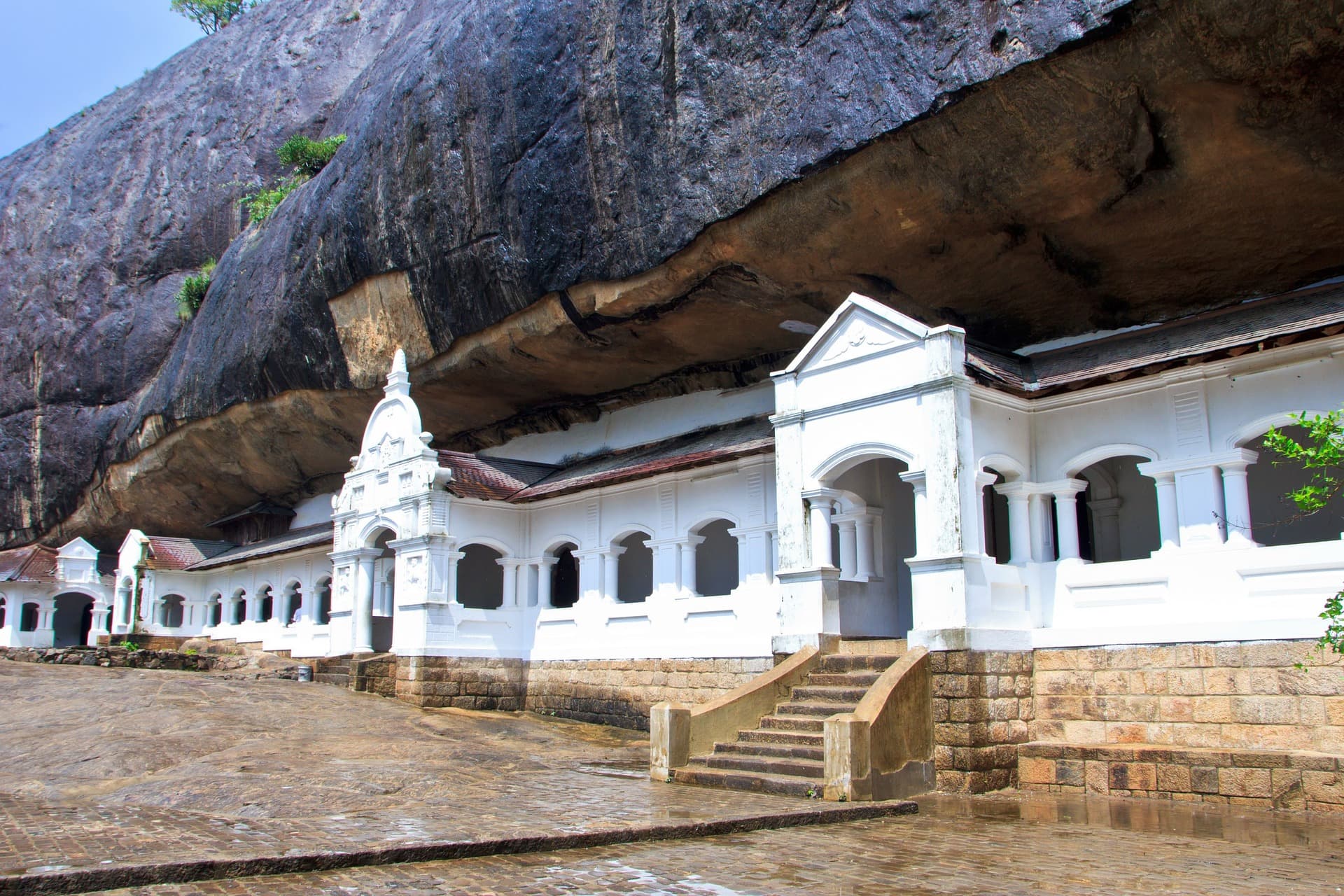
Dambulla Cave Temple is Sri Lanka's largest and best-preserved cave temple complex. Five caves cut into a granite rock that rises 160 metres above the surrounding plains hold 153 Buddha statues and paintings covering 2,100 square metres of walls and ceilings. It has been an active place of worship for over 2,000 years and was listed as a UNESCO World Heritage Site in 1991.
The caves were first converted to temples by King Valagamba in the 1st century BC. He sheltered here during a 14-year exile from Anuradhapura and renovated the caves as an act of thanks after regaining his throne. The paintings and statues span styles from the 1st century BC through to the 18th century Kandyan period, showing how Buddhist art developed over centuries.
Ideal Duration
0.5 day to explore the Cave temple and its surroundings.
Best Time to Visit
Year Around destination with no specific season
💡 Travel Tips
- • Start early morning to beat the heat
- • Avoid poya days and public holidays for a less crowded experience
- • wear long sleeves and a hat for sun protection
- • Plan your itinerary to cover key attractions

Travelling from the UK?
Compare insurance prices →
By Private Car/Taxi (Recommended)
- • Distance: Nearly 158 km from Colombo
- • Duration: Nearly 3.5 hours
- • Best option: Most convenient and flexible
By Train
There is no railway station in Dambulla. If you prefer rail travel, use a nearby station and continue by taxi or bus.
- • Route: Check current train routes and choose the most practical connection before continuing by road
- • Duration: Travel time depends on the train, connection, and road transfer
- • Cost: Check current train fares by class
By Bus
- • Route: Colombo Fort to Dambulla bus stand, then continue by taxi or tuk-tuk to the temple
- • Duration: Travel time depends on the bus type and traffic conditions
- • Cost: Check current fares based on the bus type
From Sigiriya
Nearly 17 km, nearly 25 to 30 minutes by road. Easy to combine in one day.
From Kandy
Nearly 73 km, nearly 2 hours 15 minutes by road. Private transport is the most direct option.
From Colombo
Nearly 158 km, nearly 3.5 hours by road, depending on traffic and route.
Ancient Engineering Marvel
Cave Construction Techniques
- • Natural caves were carefully expanded using ancient chiseling techniques
- • Water drainage systems were integrated to protect the artwork
- • Precise calculations were used to ensure cave stability
- • Special drip ledges were carved to direct rainwater away
Engineering note: Drip-ledges were carved above the cave openings to direct rainwater away from the walls. This simple technique has protected the murals for over 2,000 years and is why the paintings are still visible today.
Construction Timeline
1st Century BCE
Initial cave excavation and basic temple structure
5th Century CE
Major expansion and addition of more Buddha statues
12th Century CE
Additional caves carved and paintings added
18th Century CE
Kandyan era renovations and new artwork
The Five Sacred Caves: A Journey Through Time
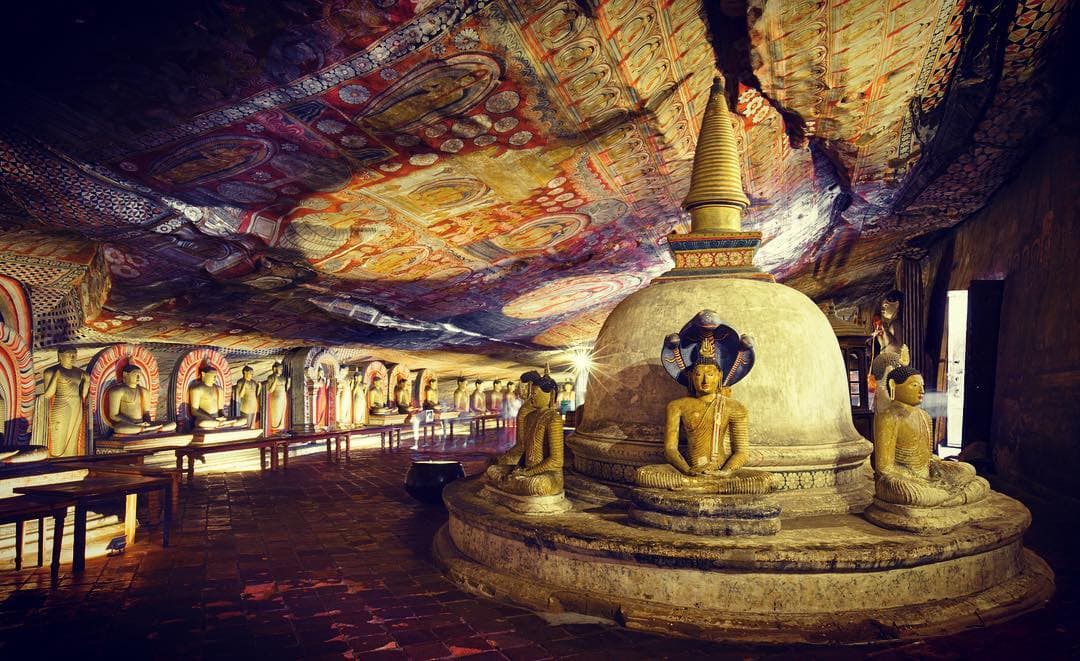
The first cave youll encounter houses a 14-meter long reclining Buddha carved from the living rock. This cave is believed to be where King Valagamba took refuge in the 1st century BC, marking the beginning of Dambullas sacred history.
- 14-meter reclining Buddha statue
- Statue of Ananda (Buddhas disciple) at the feet
- Ancient Brahmi inscriptions
- Historical significance as royal refuge
Did you know? In Cave 2, a small natural spring drips from the ceiling into a stone basin year-round, even in dry months. The water is collected and used in temple rituals.
Historical note: King Valagamba (Vattagamani Abhaya) hid in these caves around 103 BC after being driven out of Anuradhapura. He stayed for 14 years, then converted the caves into a temple after reclaiming the throne.
Art note: The earliest paintings in the complex date to the 1st century BC. Later artists painted over and alongside older work, so many walls show multiple layers from different periods.
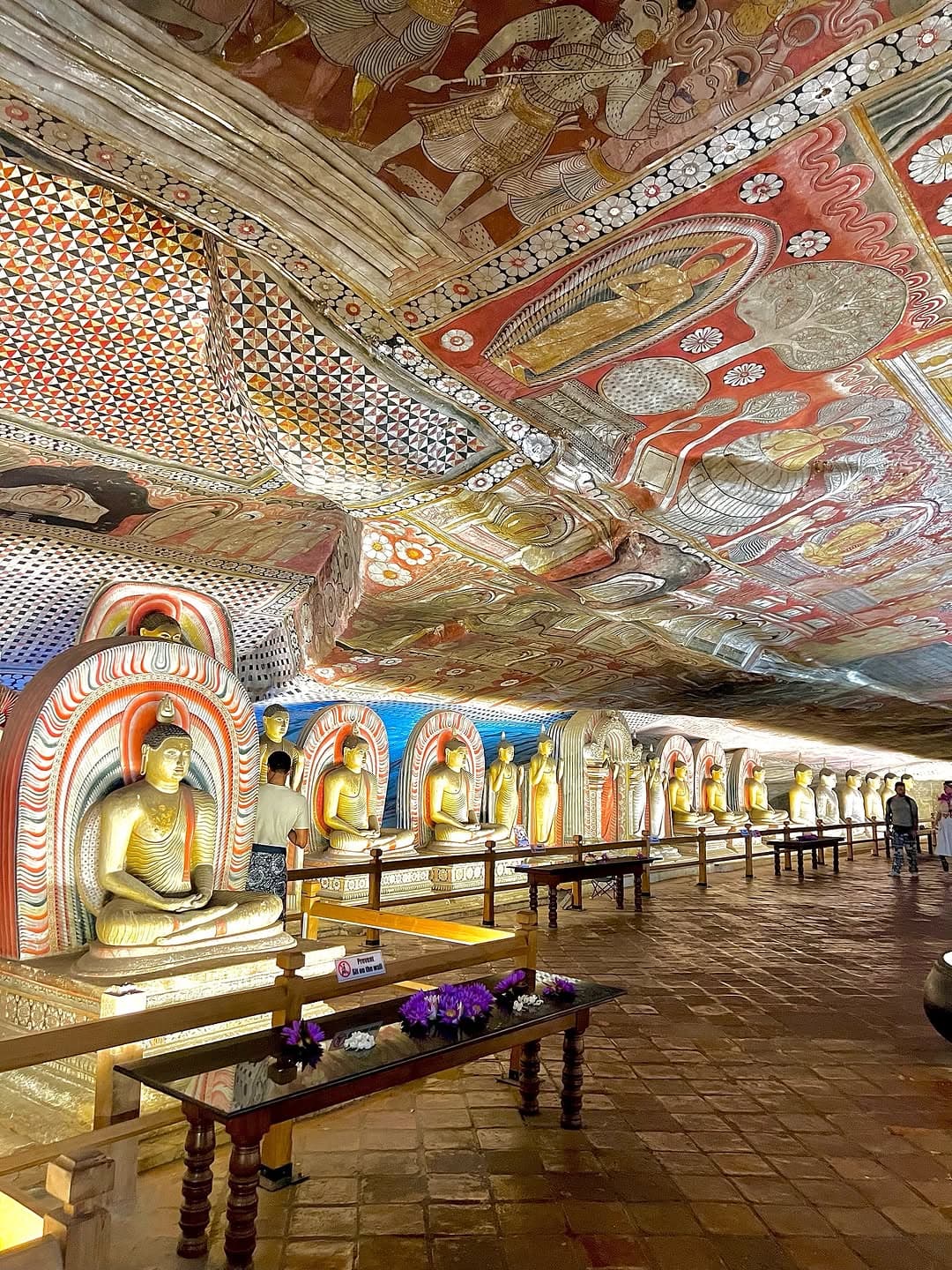
Cave 2 is the largest cave in the complex. It has 56 Buddha statues and the most paintings of any cave here. The entire ceiling is painted with scenes from the Buddha's life and Jataka tales (stories of past lives).
- 56 Buddha statues in various poses
- Extensive ceiling paintings covering 1,500 sq meters
- Statues of King Valagamba and King Nissanka Malla
- Natural spring providing holy water
Did you know? Cave 2 contains the oldest paintings in the complex, dating to the 1st century BC. Artists painted the ceiling from scaffolding while lying on their backs. The scaffolding holes are still visible in the rock walls today.
Did you know? The Kandyan-period artists who painted Cave 3 used natural mineral pigments mixed with organic binders. The vivid reds, yellows, and blacks in this cave are still clear after more than 200 years.
Built during the Kandyan period (18th century), this cave showcases the evolution of Sri Lankan Buddhist art. The paintings here are more recent but equally beautiful, featuring vibrant colors and detailed depictions of Buddhist stories.
- 50 Buddha statues from Kandyan period
- Vibrant 18th-century paintings
- Unique architectural features
- Well-preserved ceiling artwork
Cave 4: Pachima Viharaya (Western Monastery)
- • Small but significant cave
- • Central seated Buddha statue
- • Dagoba (stupa) in the center
- • Intimate spiritual atmosphere
Cave 5: Devana Alut Viharaya (Second New Monastery)
- • Newest addition to the complex
- • 11 Buddha statues
- • Hindu deities also present
- • Shows religious harmony
Note: While smaller than the first three caves, Caves 4 and 5 offer unique insights into the evolution of Buddhist art and religious practices in Sri Lanka.
The Golden Temple: Modern Marvel
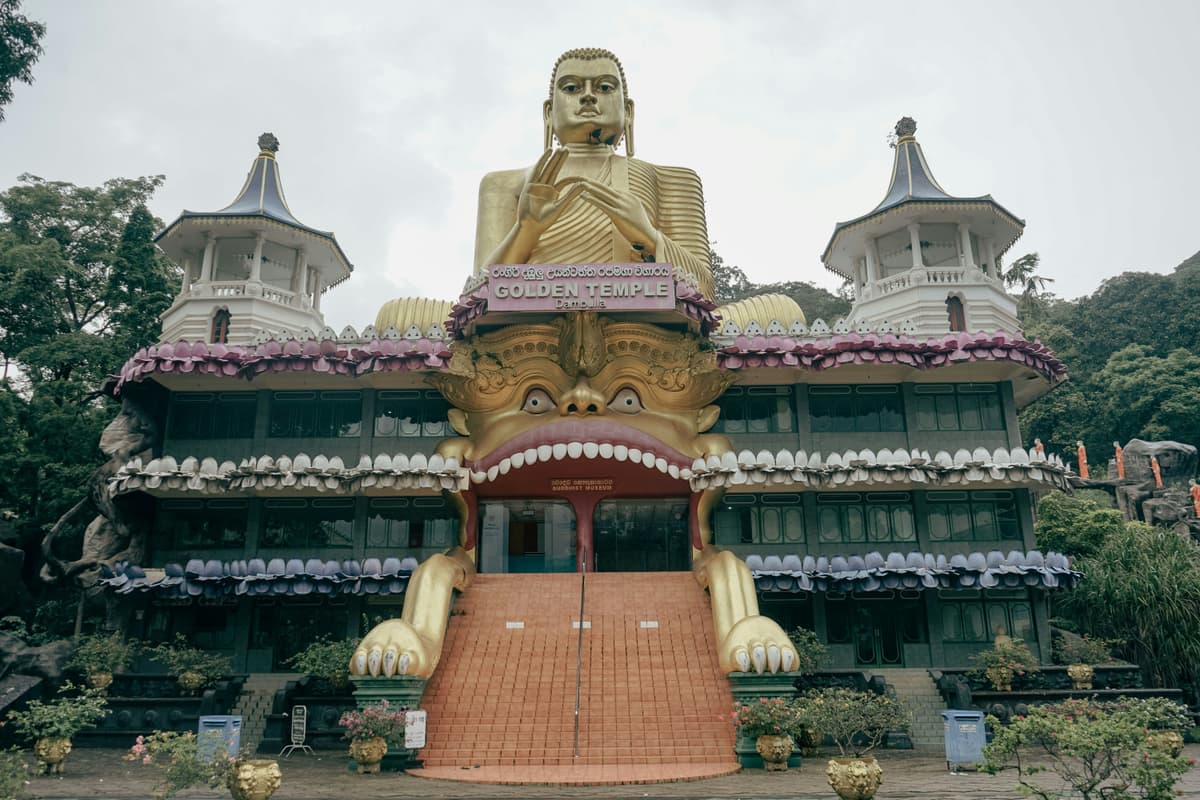
At the base of the rock is the Golden Temple, built in 2000. It serves as the main entrance to the cave complex. A large golden Buddha statue stands at the front. Inside there is a small museum with information about the site's history and some religious artifacts.
The museum is worth a quick look before you climb. It gives background on the caves and the different periods of construction. The building also has toilets and a place to store your shoes before entering.
Golden Temple Features:
- • 30-meter tall golden Buddha statue
- • Museum with ancient artifacts
- • Air-conditioned visitor center
- • Gift shop and facilities
- • Starting point for cave temple visit
Ancient Art & Architecture
Artistic Techniques
- • Natural pigments from local minerals and plants
- • Fresco technique applied to rock surfaces
- • Multiple layers spanning different periods
- • Remarkable preservation in cave environment
Common Themes
- • Buddhas life story and previous births
- • Jataka tales (moral stories)
- • Celestial beings and divine figures
- • Geometric and floral patterns
Buddha Statues
- • Seated meditation pose (most common)
- • Standing teaching pose
- • Reclining parinirvana pose
- • Various hand gestures (mudras)
Materials & Techniques
- • Carved from living rock
- • Clay and plaster additions
- • Gold leaf and paint decoration
- • Crystal and gem inlays
Visitor Information & Guidelines
Entry Fees & Hours
- • Check current ticket prices before you visit
- • Check current opening hours before you travel
- • Prices and access rules can change during holidays and special temple dates
Whats Included
- • Access to all five caves
- • Golden Temple museum entry
- • Shoe storage at entrance
- • Basic site information
Additional Services
- • Local guides may be available at busy times
- • Shoe storage is usually available near the entrance area
- • Small shops and refreshments are often available near the base
- • Ask on site about current photography rules
Dress Code
- • Cover shoulders and knees
- • Remove shoes before entering caves
- • White or light-colored clothing preferred
- • Avoid revealing or tight clothing
Behavior Guidelines
- • Maintain respectful silence
- • Dont point feet toward Buddha statues
- • No touching of paintings or statues
- • Photography allowed (no flash)
Cultural Sensitivity
- • This is an active place of worship
- • Be respectful of praying devotees
- • Follow your guides instructions
- • Consider making a small donation
Temple Life Today
Dambulla is not only a historic site, it is still an active Buddhist temple. You may see devotees bringing flowers, lighting oil lamps, or praying quietly inside the caves.
Visitor numbers often rise on Poya days and other religious dates. If you want a quieter visit, choose a normal weekday and arrive early.
- • Keep your voice low inside the caves
- • Follow instructions from temple staff
- • Give space to people who are praying
- • Do not touch paintings, statues, or cave walls
Conservation & Preservation
Why the Murals Survived
- • Drip-ledges above the cave mouths help carry rainwater away
- • The cave interiors are naturally sheltered from direct weather
- • The site has been protected as a religious and heritage monument for centuries
What Still Needs Protection
- • Natural weathering of rock surfaces
- • Moisture and dirt carried in by heavy visitor traffic
- • Damage caused by touching painted or carved surfaces
- • The need to balance access with long-term preservation
How Visitors Can Help
- • Follow photography guidelines
- • Maintain distance from paintings
- • Do not touch statues, murals, or cave walls
- • Follow marked paths and temple instructions
One of the simplest but most important preservation features is the carved drip-ledge above each cave opening. It helps keep rainwater off the decorated walls.
Best Time to Visit Dambulla
- • Cooler temperatures for climbing
- • Fewer crowds and tour groups
- • Better lighting for photography
- • Peaceful atmosphere for meditation
- • Fresh morning air
- • Golden hour lighting
- • Cooler than midday
- • Beautiful sunset views
- • Less crowded than morning
- • Good for photography
- • Very hot and humid
- • Crowded with tour groups
- • Harsh lighting for photos
- • Uncomfortable climbing conditions
- • Limited parking availability
Nearby Places to Visit
Other places worth visiting within easy reach of Dambulla Cave Temple
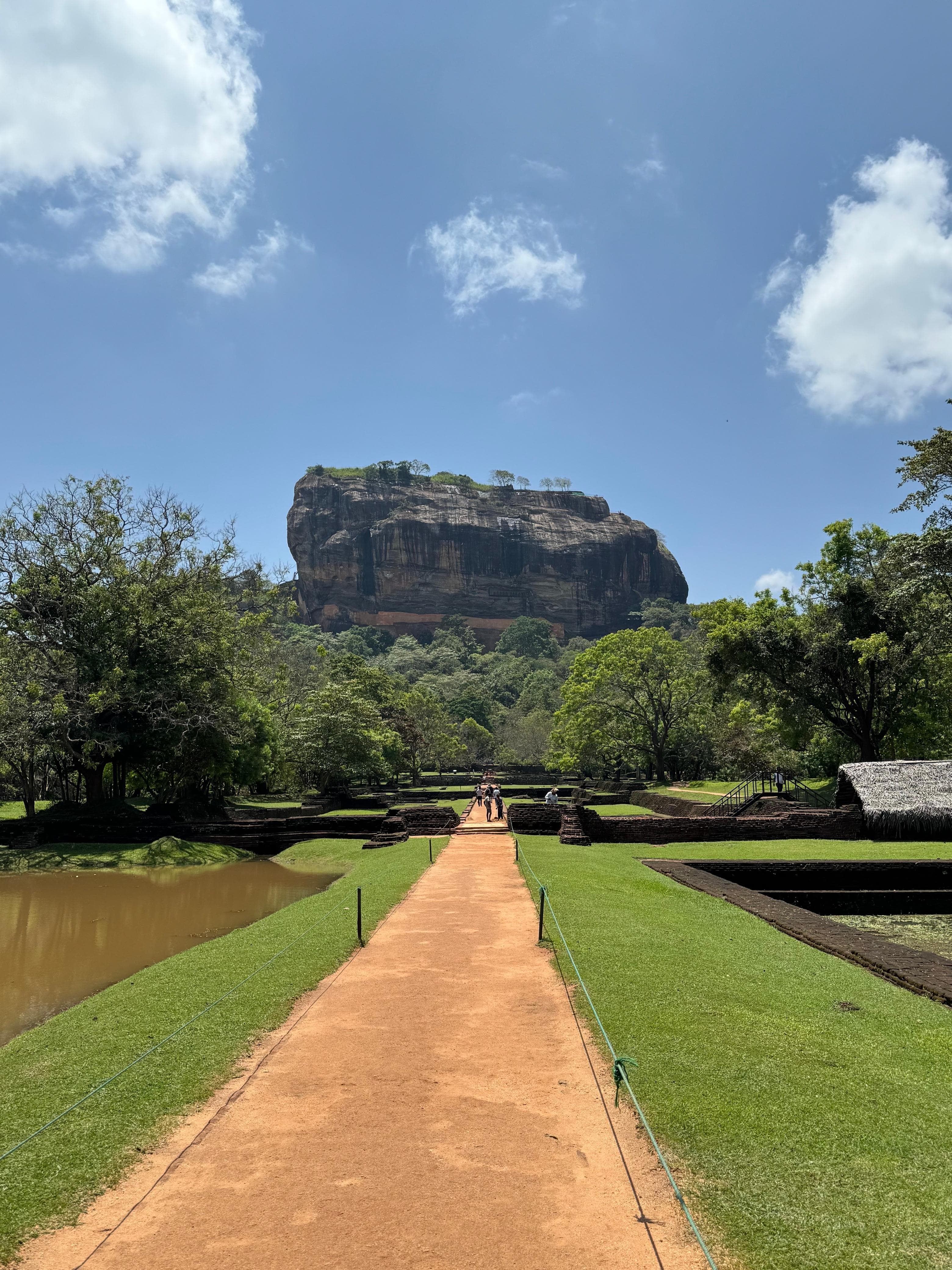
Sigiriya Rock Fortress
An ancient rock fortress and UNESCO World Heritage Site known for its stunning frescoes and panoramic views.
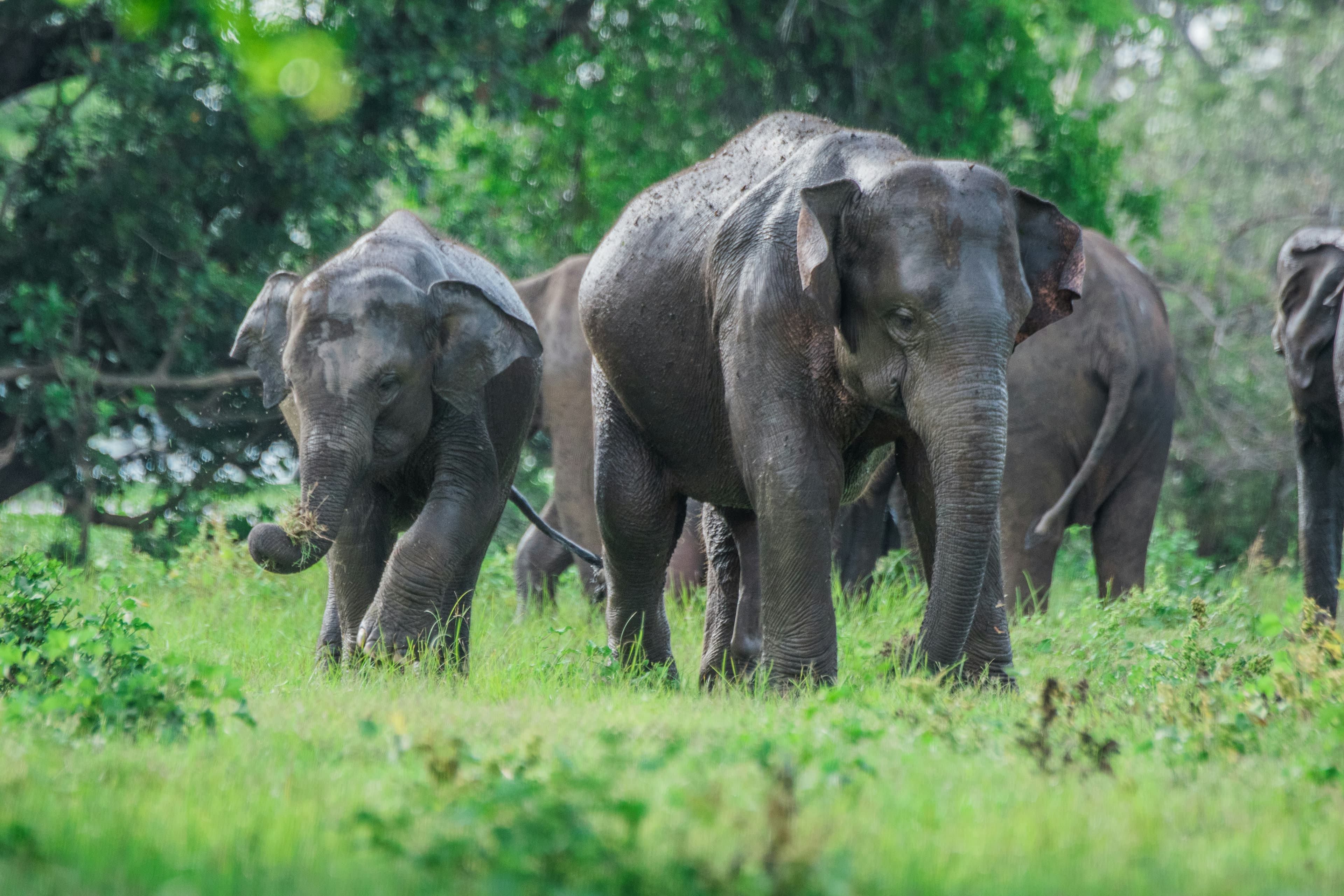
Minneriya National Park
Minneriya National Park is known for its large elephant population and diverse wildlife.
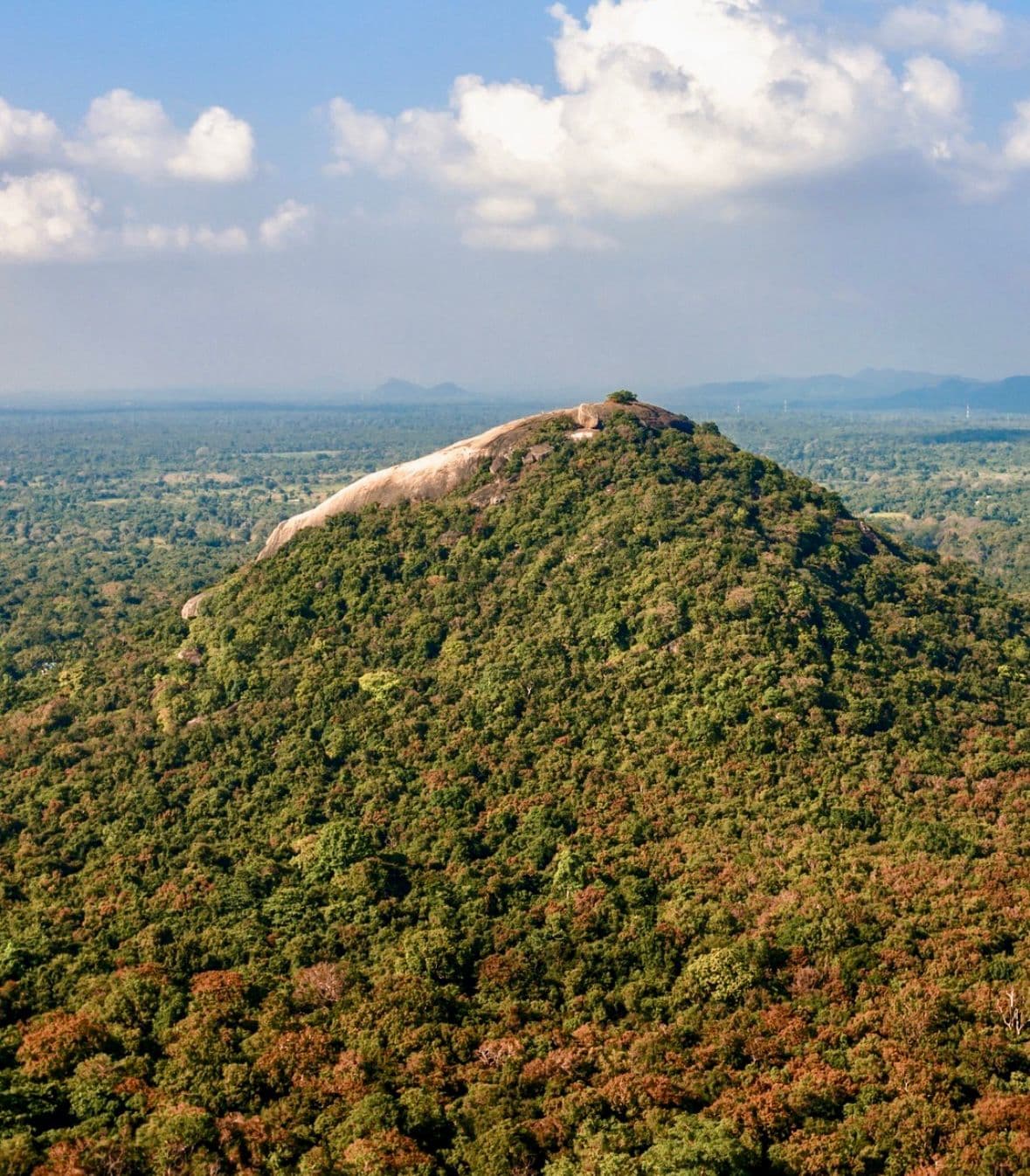
Pidurangala Rock
A massive rock formation offering panoramic views of Sigiriya and the surrounding jungle.
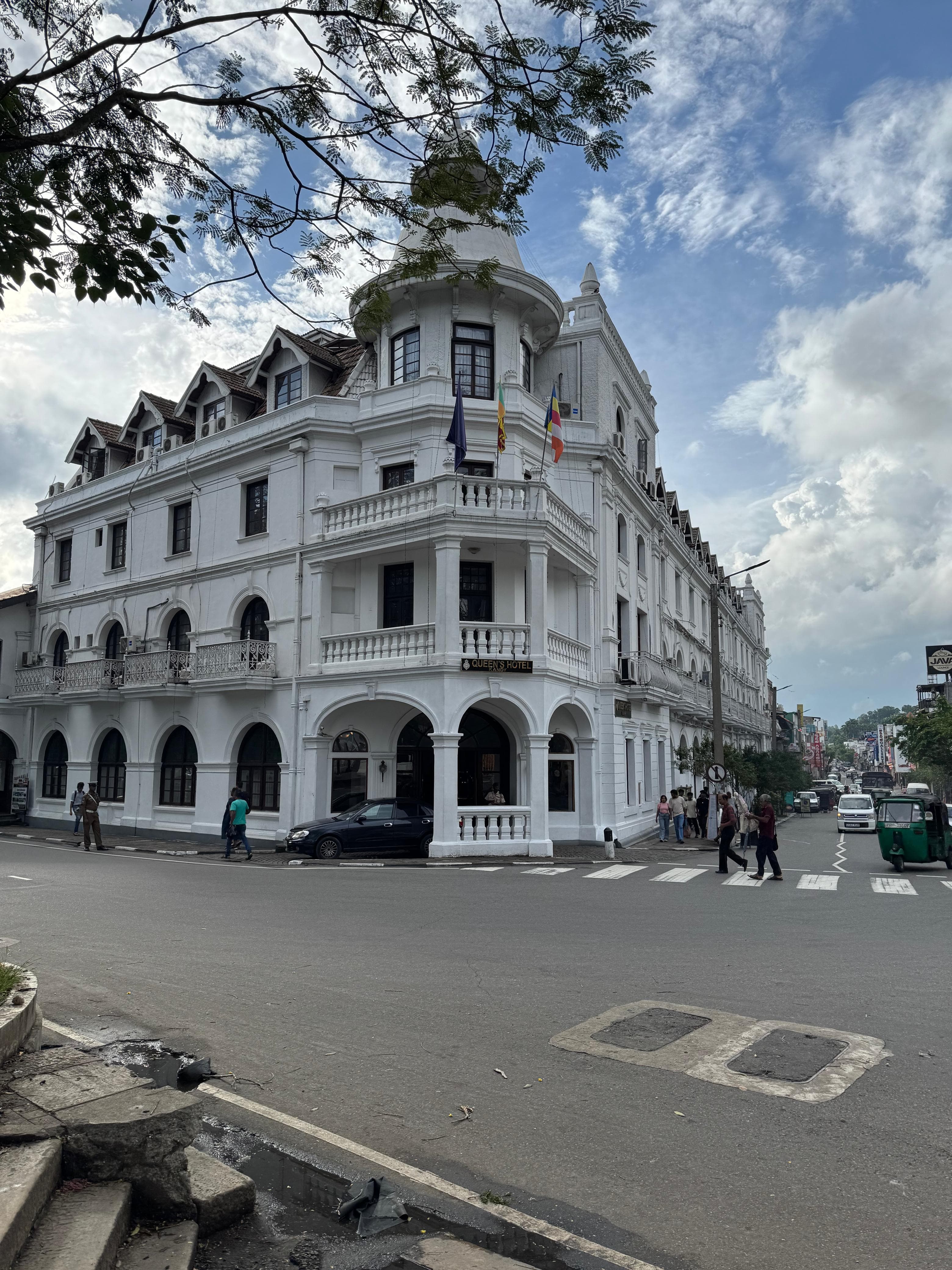
Kandy
Cultural capital with the Temple of the Tooth, beautiful lake, and traditional performances.
Suggested Day Trip Combinations
Cultural Triangle
Dambulla Cave Temple → Sigiriya Rock Fortress → Pidurangala Rock → Return
Wildlife & History
Dambulla Cave Temple → Minneriya National Park → Return
Getting to Dambulla Cave Temple
From Sigiriya
Nearly 17 km, nearly 25 to 30 minutes by road. Perfect for combining both attractions in one day.
From Kandy
Nearly 73 km, nearly 2 hours 15 minutes by road. Private transport is the most direct option.
From Colombo
Nearly 158 km, nearly 3.5 hours by road, depending on traffic and route.
Local Transport
- • Tuk-tuks from Dambulla town
- • Private cars and taxis
- • Tour buses and organized tours
- • Bicycle rentals for adventurous visitors
Cultural Triangle Sites
- • Sigiriya Rock Fortress, nearly 17 km by road
- • Polonnaruwa Ancient City, nearly 64 km by road
- • Anuradhapura Sacred City, nearly 64 km by road
- • Ritigala Forest Monastery
Natural Attractions
- • Minneriya National Park, nearly 27 km by road
- • Kaudulla National Park
- • Pidurangala Rock, nearly 20 km by road
- • Nalanda Gedige Temple
Tip: Dambulla is perfectly positioned for exploring the Cultural Triangle. Consider staying 2-3 days to visit multiple sites.
Allow 2–3 hours for a proper visit. Start with the Golden Temple at the base, then climb the steps to the caves. The climb takes about 20 minutes on a stone staircase. Shoes must be removed before entering any cave.
Cave 2 takes the most time. Move slowly and look at both the walls and ceiling. Flash photography damages the paint, so turn it off. Avoid touching any surfaces.
Early morning (before 9 AM) is the best time. It is cooler, less crowded, and the light inside the caves is better. Avoid Poya days if you want fewer people.