
👑 King Ravana: The Mighty Emperor of Ancient Lanka
Unveiling the Legend of the Ten-Headed King - His Powers, Wisdom, and Legacy
📌 Disclaimer: This article presents King Ravana as described in ancient texts like the Ramayana and local Sri Lankan folklore. Different cultures and traditions may have varying interpretations of this legendary figure. We present historical, mythological, and cultural perspectives for educational purposes.
Who Was King Ravana?
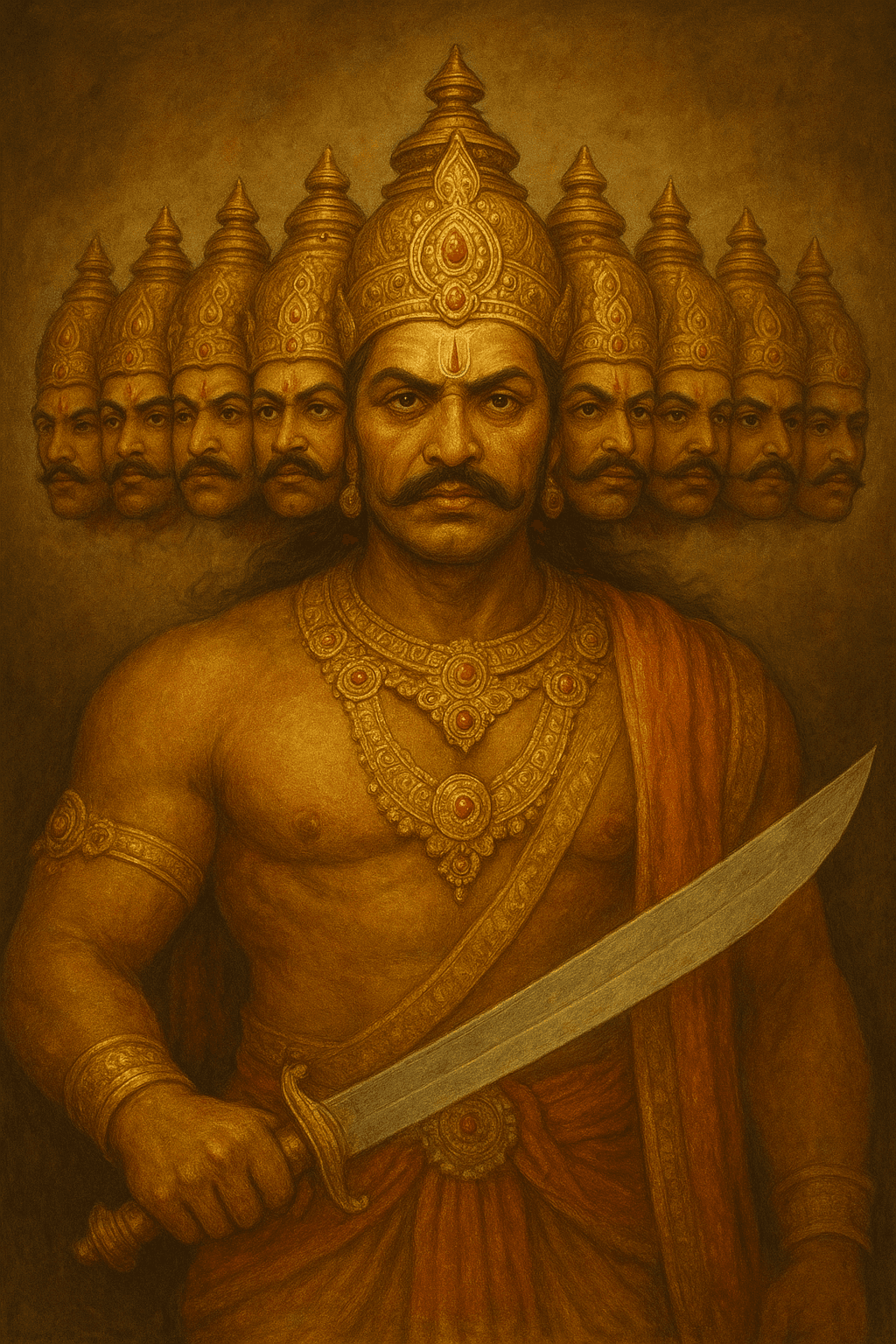
King Ravana, known as Ravana Raja in Sri Lanka, was the legendary emperor who ruled the ancient kingdom of Lanka thousands of years ago. He is one of the most powerful and complex characters in the great Indian epic, the Ramayana.
Unlike the simple villain portrayed in some versions of the story, Ravana was actually a brilliant scholar, expert musician, powerful warrior, and devoted follower of Lord Shiva. He was so knowledgeable that even his enemies respected his wisdom.
In Sri Lankan culture, Ravana is often remembered not just as a character from mythology, but as a great king who brought prosperity, advancement in medicine, and technological wonders to his kingdom.
🎭 The Mystery of the Ten Heads
Ravana is most famously known for having ten heads and twenty arms. But what did this really mean?
What the Ten Heads Represented:
- •Knowledge of the Four Vedas and Six Shastras: Ancient Hindu scriptures and philosophical texts
- •Master of Multiple Subjects: Each head symbolized expertise in different fields like warfare, medicine, astrology, and arts
- •Supreme Intelligence: His ten heads showed he could think from multiple perspectives at once
- •Control Over Directions: He had power over all ten directions of the universe
Some scholars believe the ten heads were symbolic rather than physical, representing his vast knowledge. Others say it was a divine boon he received after years of intense meditation and sacrifice.

🤔 Did You Know?
Ravana once lifted the entire Mount Kailash (home of Lord Shiva) with his bare hands! When Shiva pressed his toe down on the mountain, Ravana was trapped for thousands of years. To seek forgiveness, he composed the famous "Shiva Tandava Stotram" - a powerful hymn that is still recited today.
👤 Ravana's Appearance and Form
Physical Features
- 👑Ten Heads (Dasa Shirsha): Each head adorned with a golden crown
- 💪Twenty Arms (Vimsa Bhuja): Incredibly strong arms that could wield multiple weapons at once
- ⚡Coppery-Red Eyes: Burning with intensity and power
- 🌟Dark Complexion: Described as having a radiant dark blue or black complexion
- 👔Royal Attire: Dressed in magnificent robes, jewels, and ornaments befitting an emperor
Height and Build
Ancient texts describe Ravana as being extraordinarily tall - some accounts say he stood over 12 feet tall! His massive frame and muscular build made him appear like a moving mountain.
Divine Marks
- •Sacred marks on his body from years of intense meditation
- •Scars from battles with gods and demons
- •A naturally intimidating and awe-inspiring presence
⚡ Ravana's Incredible Powers and Abilities
Ravana was not an ordinary king. Through years of intense penance (tapasya), he gained incredible powers from the gods themselves. Here are his most remarkable abilities:
🛡️ Invincibility Boon
Ravana performed such extreme penance that Brahma (the creator god) granted him invincibility from gods, demons, and celestial beings. However, in his arrogance, Ravana never asked for protection from humans and animals - which became his downfall!
🔮 Shapeshifting (Maya)
He could change his form at will - appearing as a holy man, a beautiful deer, or any creature he desired. This power of illusion made him extremely dangerous.
✈️ Flight and Levitation
Ravana could fly through the air without any vehicle. He could also levitate and move mountains with his mind.
🌪️ Control Over Elements
He commanded fire, water, wind, and earth. He could create storms, cause earthquakes, and summon rain.
💪 Superhuman Strength
With twenty arms, he could wield multiple divine weapons simultaneously. He defeated powerful gods in battle and conquered the heavens.
🧠 Extraordinary Intelligence
Master of the four Vedas, six Shastras, 64 arts, astronomy, astrology, medicine, and warfare. He could predict the future through his knowledge of stars.
🎵 Divine Music
An exceptional veena (stringed instrument) player. Legend says he once played music so beautiful that even Lord Shiva was moved.
⚕️ Advanced Medicine
Expert in Ayurveda (ancient medicine). He wrote medical texts and could cure diseases that others couldn't.
🤔 Did You Know?
Ravana was so devoted to Lord Shiva that he once offered his own heads as a sacrifice! After cutting off nine of his heads, Lord Shiva appeared and restored them, blessing Ravana with even greater powers. This is why Ravana is also called "Dashamukha" or "Dasakantha" (ten-faced one).
✈️ Pushpaka Vimana: The Flying Palace

One of the most fascinating aspects of the Ravana legend is his incredible flying vehicle - the Pushpaka Vimana (Pushpaka means "flowery" and Vimana means "vehicle" or "palace").
What Made It Special?
- ✓Self-Propelled: It could fly on its own, powered by some mysterious ancient technology
- ✓Thought-Controlled: The Vimana responded to the pilot's thoughts and commands
- ✓Adjustable Size: It could expand to carry an entire army or shrink for a single person
- ✓Luxurious Interior: Equipped with comfortable seats, gardens, fountains, and all royal comforts
- ✓Speed: Could travel anywhere in the world within moments
- ✓Golden Construction: Made of gold and precious gems that glittered in the sky
Origin: Originally created by Vishwakarma (the divine architect) for Kubera (god of wealth), Ravana conquered and took it for himself. After Ravana's defeat, Lord Rama used it to return to his kingdom!
🏗️ Ravana's Great Works and Achievements
Beyond the stories of war, Ravana was a remarkable king who brought unprecedented prosperity and advancement to his kingdom:
🏛️ Infrastructure and Architecture
- • Built the magnificent golden city of Lanka with towering palaces
- • Created advanced irrigation systems and water management
- • Constructed airports (vimana stands) for flying vehicles
- • Developed roads, bridges, and public facilities
- • Built the famous Sigiriya fortress according to some legends
📚 Education and Knowledge
- • Established libraries and centers of learning
- • Authored books on medicine, astrology, and warfare
- • Wrote the "Ravana Samhita" - an ancient book on astrology
- • Composed devotional music and hymns
- • Promoted arts, music, and literature
⚕️ Medical Advances
- • Developed advanced surgical techniques
- • Created herbal medicines and treatments
- • Understood anatomy and physiology deeply
- • Trained physicians in Ayurvedic medicine
- • Established hospitals and healing centers
🔬 Technology and Innovation
- • Advanced knowledge of aeronautics (flying machines)
- • Sophisticated weapons and defense systems
- • Understanding of astronomy and planetary movements
- • Agricultural innovations and farming techniques
- • Mining and metallurgy expertise
🤔 Did You Know?
Ravana's golden city of Lanka was described as so beautiful and advanced that it made even the cities of gods seem ordinary. The streets were paved with gems, buildings made of gold, and the city had automatic defense systems. Some researchers today wonder if these descriptions hint at an ancient advanced civilization!
📖 Ravana in the Ramayana Epic
The Ramayana tells the story of how Ravana's one mistake led to his downfall:
The Turning Point
Ravana fell in love with Sita, the wife of Prince Rama. When she rejected him, his ego couldn't accept it. Using his powers of illusion, he kidnapped her and brought her to Lanka.
This one act of arrogance brought about the greatest war in ancient history - the Battle of Lanka.
The Great War
- ⚔️Prince Rama, helped by the monkey army led by Hanuman, built a bridge to Lanka
- ⚔️The war lasted for months with incredible battles
- ⚔️Ravana's brothers and sons fought valiantly but were defeated
- ⚔️Even when defeated, Ravana's heads would grow back!

The Final Moment
Finally, Rama used a special divine arrow blessed by the gods. The arrow struck Ravana in his heart - the one place where his life force resided. As Ravana fell, he acknowledged Rama's righteousness and accepted his defeat with dignity. Even in death, his knowledge and devotion to Shiva were respected by his enemies.
👨👩👧👦 Ravana's Family and Lineage
Parents
Father: Vishrava (a learned sage)
Mother: Kaikasi (a demon princess)
This made Ravana half Brahmin (scholar) and half demon!
Siblings
- • Kumbhakarna: Giant brother who slept for months
- • Vibhishana: Righteous brother who joined Rama
- • Shurpanakha: Sister whose insult started the conflict
Children
- • Meghanada (Indrajit): Most powerful son who defeated Indra
- • Akshayakumara: Brave warrior son
- • Several other sons and a daughter
📍 Ravana Sites in Sri Lanka
Many places in Sri Lanka are connected to the Ravana legend. You can visit these fascinating sites today:
🏔️ Ravana Falls
A stunning waterfall near Ella, believed to be where Ravana bathed. One of Sri Lanka's widest waterfalls.
🕳️ Ravana Cave (Ella)
A massive cave complex where, according to legend, Ravana hid Sita after kidnapping her.
⛰️ Sita Amman Temple
Hindu temple believed to mark the spot where Sita was held captive in the Ashoka Vatika (garden).
✈️ Weragantota (Mahiyangana)
Believed to be an ancient airport where Ravana's Pushpaka Vimana landed!
🏰 Ravana's Palace (Sigiriya)
Some believe the magnificent Sigiriya rock fortress was actually built by Ravana, not King Kashyapa.
🗿 Danigala (Ravana's Cliff)
A challenging rock climb where legend says Ravana meditated and performed rituals.
🤔 Did You Know?
In Thailand, Ravana (called "Tosakanth") is not seen as a villain but as a complex anti-hero. In some parts of India, people worship him for his devotion to Shiva. In Sri Lanka, he's remembered as a great king. The same character, three different perspectives!
🌏 Different Views of Ravana
✅ Positive Aspects
- • One of the greatest scholars who ever lived
- • Devoted follower of Lord Shiva
- • Excellent administrator and king
- • Advanced his kingdom in science, medicine, and technology
- • Brave warrior who never backed down
- • Loving brother, father, and husband
- • Never touched Sita without her consent despite having the power
- • Accepted his defeat with dignity
❌ Negative Aspects
- • Extreme arrogance and ego
- • Kidnapped Sita against her will
- • Used his powers for selfish desires
- • Ignored wise counsel from his brother Vibhishana
- • His pride led to the destruction of his kingdom
- • Refused to admit his mistakes
- • Put his desires above his people's welfare
- • Despite all knowledge, couldn't control his ego
The Lesson of Ravana
Ravana's story teaches us that knowledge and power without humility and righteousness are meaningless. He had everything - intelligence, strength, devotion, wealth - but his ego destroyed it all. Even the greatest can fall if they let pride rule over wisdom.
🔬 Modern Questions About Ravana
❓ Was the Pushpaka Vimana an ancient aircraft?
Some researchers wonder if the detailed descriptions of the flying palace suggest advanced ancient technology. The Vimana Shastra (ancient texts) contain what seem like technical specifications!
❓ Did Lanka have advanced civilization?
Descriptions of golden cities, automatic defenses, advanced medicine, and sophisticated weapons make people wonder if an advanced civilization existed in ancient Sri Lanka.
❓ Was Ravana a real historical figure?
While most consider him mythological, the numerous places in Sri Lanka connected to him, ancient texts mentioning him, and Sri Lankan folk traditions suggest he might have been based on a real ancient king.
❓ What about his ten heads?
Scholars debate whether this was literal or symbolic. It might have represented his vast knowledge, or it could be an artistic way to show his power and wisdom.
🎯 The Legacy of King Ravana
King Ravana remains one of the most complex and fascinating characters in world mythology. He was not simply a villain - he was a brilliant scholar, devoted worshipper, loving family man, and powerful king whose one fatal flaw (his pride) led to his downfall.
Whether you see him as a great king of ancient Lanka or as a cautionary tale about ego and desire, Ravana's story has captivated people for thousands of years and continues to do so today.
When you visit Sri Lanka and see the waterfalls, caves, and ancient sites bearing his name, remember that you're walking through lands steeped in one of humanity's oldest and most powerful legends. 🏔️✨
🎵 Final Fascinating Fact!
The "Shiva Tandava Stotram" that Ravana composed is considered one of the most powerful hymns in Hinduism. Even today, thousands of years later, musicians and devotees sing this beautiful praise of Lord Shiva. Ravana may have been defeated in war, but his devotional music lives on forever!