Marine Life Experience in Sri Lanka
Your Ultimate Guide to Witnessing Ocean creatures up close without disturbing them
Sri Lanka: A Marine Life Paradise
Sri Lanka's strategic position in the Indian Ocean makes it one of the world's premier destinations for whale watching. The island's deep coastal waters serve as important migration routes for various marine mammals, offering visitors unprecedented opportunities to witness these magnificent creatures in their natural habitat.
From the gentle giants of the ocean - the Blue Whales - to playful pods of dolphins, Sri Lanka's waters host an incredible diversity of marine life. The country's unique geographic location, where the continental shelf is closest to the shore, creates perfect conditions for observing these majestic creatures.
Marine Creatures You Can See in Sri Lanka
Sri Lanka's coastal waters are home to an amazing variety of marine life. Here are the magnificent creatures you might encounter during your ocean adventure.
⚠️ Important Note: Remember that our planet is mostly covered by water, and these magnificent marine creatures spend most of their time deep beneath the surface. Their appearances at the water's surface depend on various factors including time of day, weather conditions, mating seasons, feeding patterns, and migration cycles. While we do our best to maximize your chances of sightings, please understand that wildlife encounters are never guaranteed. Don't be disappointed if you don't see all these creatures during your tour each ocean adventure is unique and special in its own way!
Whales

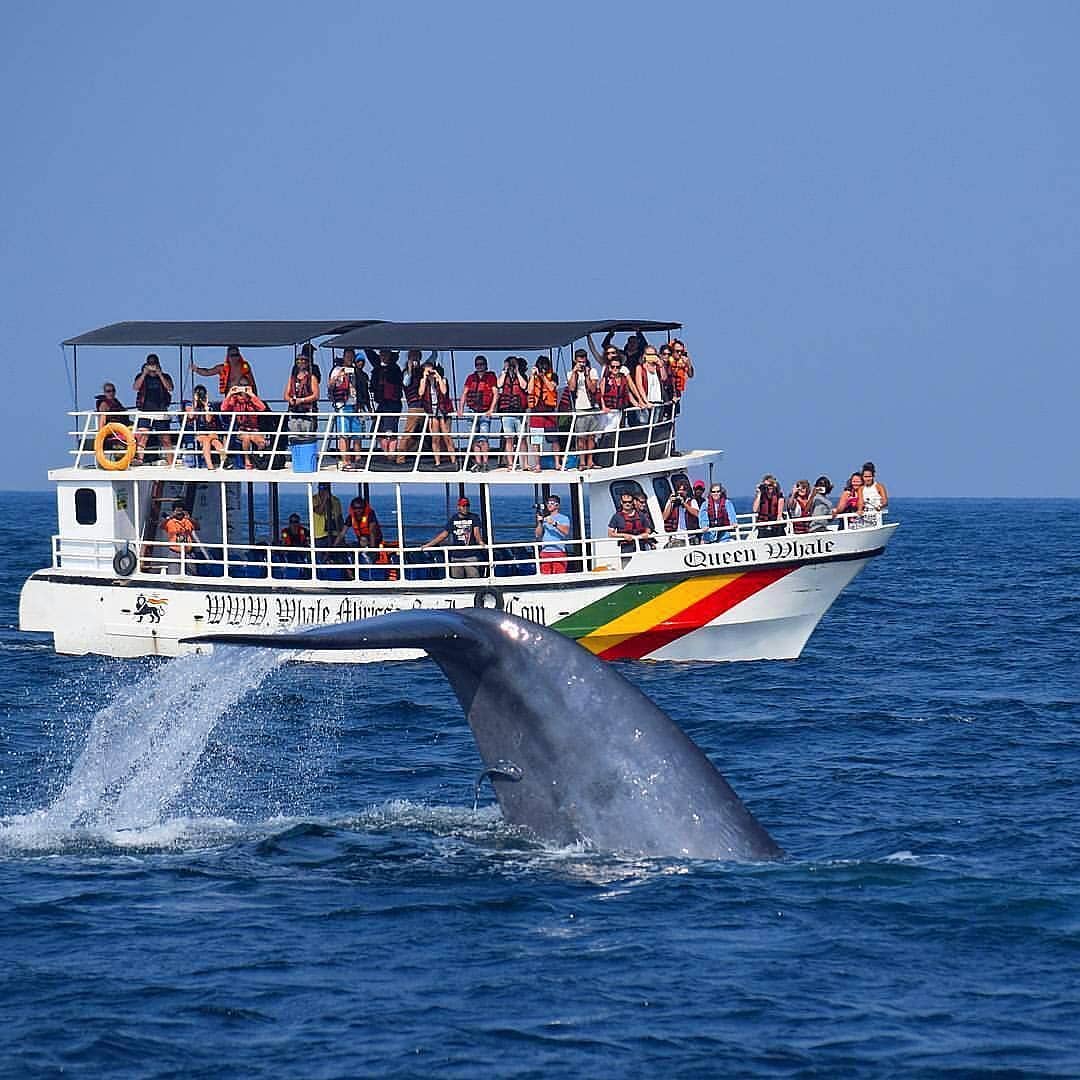
Blue Whale
Balaenoptera musculus
The largest animal ever to exist on Earth. These gentle giants can grow up to 30 meters long and weigh as much as 200 tons. Blue whales visit Sri Lankan waters to feed on the abundant krill populations.
Best Time: Nov-Apr (South), Mar-Aug (East)
Locations: Mirissa, Trincomalee, Kalpitiya
Size: Up to 30 meters long
Sperm Whale
Physeter macrocephalus
The largest toothed whale and deepest diving mammal on Earth. Sperm whales can dive up to 2,000 meters deep and hold their breath for up to 90 minutes while hunting giant squid.
Best Time: Year-round, peak Nov-Apr
Locations: Mirissa, Trincomalee
Diving: Up to 2,000 meters deep
Bryde's Whale
Balaenoptera edeni
A medium-sized baleen whale that stays in tropical waters year-round. They are about 12-15 meters long and have three ridges on their head. These whales are curious and sometimes approach boats closely.
Best Time: Year-round
Locations: Mirissa, Trincomalee
Size: 12-15 meters long
Pilot Whales
Globicephala spp.
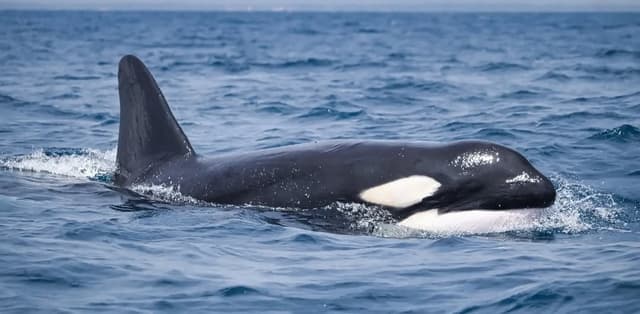
Actually large dolphins with distinctive bulbous heads. They travel in tight family groups and are very social. Pilot whales are dark gray or black and can grow up to 6 meters long.
Best Time: November to April
Locations: Kalpitiya, Mirissa
Behavior: Travel in family groups
Dolphins
Spinner Dolphins
Stenella longirostris
Named for their amazing spinning jumps out of the water. These playful dolphins travel in large groups, sometimes over 1,000 individuals. They are incredibly acrobatic and love to put on a show.
Best Time: Nov-Mar (Kalpitiya), Year-round
Locations: Kalpitiya, Mirissa, Trincomalee
Behavior: Acrobatic spins and jumps
Bottlenose Dolphins
Tursiops truncatus
The most well-known dolphin species with their friendly nature and characteristic smile. These intelligent creatures often approach boats to surf in the bow waves.
Best Time: Year-round
Locations: Mirissa, Trincomalee, Kalpitiya
Behavior: Bow riding, highly social
Risso's Dolphins
Grampus griseus
These unique dolphins have no beak and their bodies are covered in white scars from social interactions and squid battles. They start dark gray but become whiter with age due to scarring.
Best Time: November to April
Locations: Mirissa, Trincomalee
Habitat: Deep offshore waters
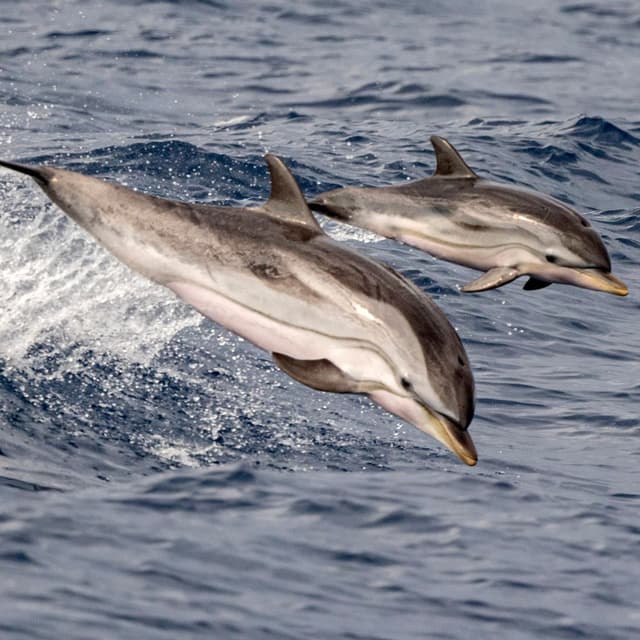
Striped Dolphins
Stenella coeruleoalba
Beautiful dolphins with distinctive blue and white stripes running along their sides. They are energetic and acrobatic, often leaping high out of the water. They travel in groups of 10-500 individuals.
Best Time: November to April
Locations: Mirissa, Trincomalee
Behavior: Fast swimmers, acrobatic leaps
Premier Whale Watching Locations


Located in the Southern Province, Mirissa has earned its reputation as Sri Lanka's premier whale watching destination. The deep waters off its coast are frequented by Blue Whales, Sperm Whales, and various species of dolphins throughout the season.
Key Information
- Peak Season: November to April
- Trip Duration: 4-6 hours
- Start Time: Early morning (5:30 - 6:30 AM)
- High sighting success rate (90%+)


Trincomalee offers a unique whale watching experience along Sri Lanka's eastern coast. The deep natural harbor and submarine canyon create perfect conditions for whales and dolphins, particularly during the east coast season.
Key Information
- Peak Season: March to August
- Trip Duration: 3-4 hours
- Unique opportunity to see Blue Whales in summer
- Combined with snorkeling opportunities


Kalpitiya is renowned for its large pods of dolphins, sometimes numbering in the thousands. The area is particularly famous for spinner dolphins, known for their acrobatic displays, making it a photographer's paradise.
Key Information
- Best Season: November to March
- Trip Duration: 2-3 hours
- Specializes in dolphin watching
- Occasional pilot whale sightings
Marine Life You Can Encounter
Sri Lanka's waters are home to an incredible diversity of marine mammals, making it one of the world's top destinations for whale and dolphin watching. The unique geographic location and deep waters create perfect conditions for these magnificent creatures to thrive and migrate through the area.
Blue Whale
The largest animal to have ever existed on Earth, the Blue Whale is truly a magnificent sight.
- • Size: 24-30 meters (79-98 feet)
- • Weight: Up to 173 tonnes
- • Diet: Primarily krill, consuming up to 6 tons per day
- • Unique Features: Heart the size of a car, tongue weighing as much as an elephant
- • Best Sighting Locations: Mirissa (Dec-Apr), Trincomalee (Mar-Aug)
Sperm Whale
The largest of the toothed whales and the deepest diving mammal known to science.
- • Size: 11-18 meters (36-59 feet)
- • Weight: Up to 45 tonnes
- • Diving Ability: Can dive up to 2,250 meters for 90 minutes
- • Special Feature: Largest brain of any animal (up to 8kg)
- • Best Sighting Locations: Mirissa, Kalpitiya (Nov-Apr)
Bryde's Whale
Year-round residents in Sri Lankan waters, known for their distinctive triple ridge on their rostrum.
- • Size: 12-14 meters (39-46 feet)
- • Weight: Up to 25 tonnes
- • Behavior: Often seen feeding near the surface
- • Diet: Fish, krill, and small crustaceans
- • Sighting Season: Year-round in Sri Lankan waters
Spinner Dolphins
Famous for their acrobatic displays, spinning up to 7 times in one jump.
- • Size: 1.8-2.4 meters (6-8 feet)
- • Group Size: Can form pods of thousands
- • Special Skills: Can spin multiple times in a single leap
- • Best Viewing: Early morning in Kalpitiya
- • Behavior: Highly social, often riding bow waves
Bottlenose Dolphins
The most well-known dolphin species, known for their intelligence and social behavior.
- • Size: 2-4 meters (6.5-13 feet)
- • Intelligence: One of the smartest marine mammals
- • Social Structure: Complex family groups
- • Lifespan: 40-60 years
- • Habitat: Both coastal waters and deep seas
Risso's Dolphins
Distinctive appearance with heavily scarred bodies from social interactions.
- • Size: 3-4 meters (10-13 feet)
- • Appearance: Grey with white scarring
- • Diet: Primarily squid and octopus
- • Habitat: Deep offshore waters
- • Behavior: Less acrobatic, more deep-diving
False Killer Whales
Despite their name, these social creatures are actually large dolphins.
- • Size: 4.5-6 meters (15-20 feet)
- • Social Nature: Highly social, form strong bonds
- • Diet: Large fish and squid
- • Unique Feature: Known to share food with other pods
Sea Turtles
Several species of sea turtles can be spotted during whale watching trips.
- • Species: Green, Hawksbill, and Olive Ridley turtles
- • Size: Varying from 60-120 cm shell length
- • Habitat: Coastal waters and reefs
- • Conservation: Protected species in Sri Lanka
When to Visit
South Coast (Mirissa)
The calm seas and clear skies during these months provide ideal conditions for whale watching. Blue whales are frequently spotted as they migrate through these waters.
Best Months
- • December to March: Highest sighting rates
- • February: Peak migration period
- • April: Last month before monsoon
East Coast (Trincomalee)
The east coast offers unique summer whale watching opportunities when the south coast is affected by monsoons. The deep Trincomalee canyon attracts various marine species.
Best Months
- • May to July: Optimal weather conditions
- • March: Start of the season
- • August: Last chance before weather changes
Essential Travel Tips
- Early Start
Arrive at least 30 minutes before departure (usually 5:30-6:00 AM)
- What to Bring
Sunscreen, hat, sunglasses, light jacket, camera, seasickness medication
- Clothing
Wear comfortable, quick-drying clothes and non-slip shoes
- Listen to Crew
Always follow safety instructions from your boat crew
- Stay Seated
Remain seated during navigation unless instructed otherwise
- Seasickness Prevention
Take medication before departure if prone to motion sickness
How to Book Your Experience
To ensure the best whale watching experience in Sri Lanka, it's important to book through reliable operators who prioritize both your safety and marine life conservation. Here's our recommended booking process:
Booking Tips
- Book in Advance
Especially during peak season (December-April)
- Check Reviews
Look for operators with good safety records and ethical practices
- Confirm Details
Verify pickup location, time, and included services
Book with CeyLanka Tours
- Modern, safety-equipped boats
- Experienced crew and naturalist guides
- Responsible whale watching practices
- Flexible booking and cancellation
Contact us for bookings and inquiries:
📞 +94 70 764 6765
✉️ ceylonkatoursinfor@gmail.com