
Shapes of Stupas in Sri Lanka
Exploring the sacred architecture and symbolic designs of Buddhist stupas across the island
Understanding Stupas in Sri Lanka
Stupas, also called dagobas or chaitya in Sri Lanka, are the most important structures in Buddhist architecture. These dome-shaped buildings hold sacred relics and serve as places of worship and meditation. Sri Lanka has some of the oldest and most beautiful stupas in the world, built over 2,000 years ago.
The shape of a stupa is not just about beauty. Each design has deep religious meaning and follows ancient architectural rules written in Buddhist texts. Different shapes represent different spiritual ideas and were built during various periods of Sri Lankan history.
Did You Know?
The Jetavanaramaya stupa in Anuradhapura was once the third tallest structure in the ancient world, standing at 122 meters (400 feet). It required over 93 million baked bricks to build!
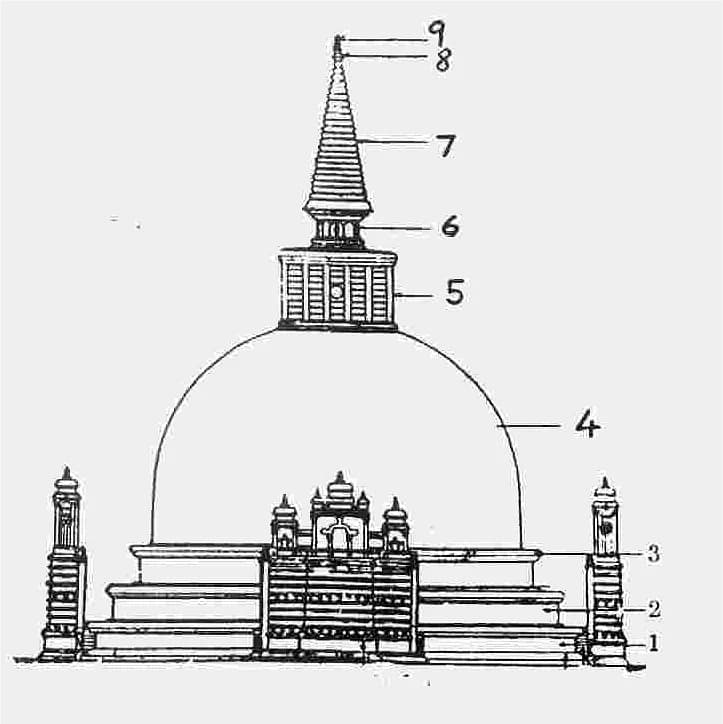
Main Parts of a Sri Lankan Stupa
Every stupa, regardless of its shape, has the same basic parts. Understanding these elements helps you appreciate the complete design:
🔵1,2,3 Pesa Valalu (Base Terraces)
Three circular stone terraces that form the base of the stupa. Each level is slightly smaller than the one below. Worshippers walk around the stupa on these terraces.
🔵4 Anda (The Dome)
The large rounded body of the stupa. This is the most visible part. Its shape, round, bell-shaped, or lotus-shaped, determines which type of stupa it is.
🔵 Garbhaya (Relic Chamber)
A sealed room built inside the dome. It holds sacred relics such as bone fragments or personal items belonging to the Buddha or a Buddhist saint. Once sealed during construction, it is never opened.
🔵5 Hatharas Kotuwa (Square Platform)
The square stone platform that sits on top of the dome. "Hatharas" means "four" in Sinhala, referring to its four sides. Guard stones are sometimes placed at each corner.
🔵6 Devata Kotuwa (Decorative Box)
A small decorated structure placed on top of the Hatharas Kotuwa. It sits between the square platform and the spire, and may hold additional sacred items.
🔵8 Kotha (Spire)
The tall spire at the very top, with a stack of umbrella-shaped rings. The number of rings is often 7 or 9. A crystal or small gem is placed at the very tip.
The Five Main Shapes of Stupas

Bubulakara (බුබුලාකාර)
Meaning: "Like a heap of paddy rice"
This is the most common stupa shape in Sri Lanka. It looks like a pile of rice grains that farmers create after harvest. The dome is round and full, rising smoothly from the base. This shape represents abundance, prosperity, and the gathering of good merit.
Famous Examples:
- Ruwanwelisaya in Anuradhapura - Built by King Dutugemunu in 140 BC
- Mirisawetiya in Anuradhapura - One of the eight sacred places
- Kiri Vehera in Polonnaruwa - Known for its pure white color
The Ruwanwelisaya is the perfect example of this shape. When you look at it, you can see how the dome curves gently like a perfect mound of rice. The ancient builders were so skilled that the shape is still perfect after more than 2,000 years.
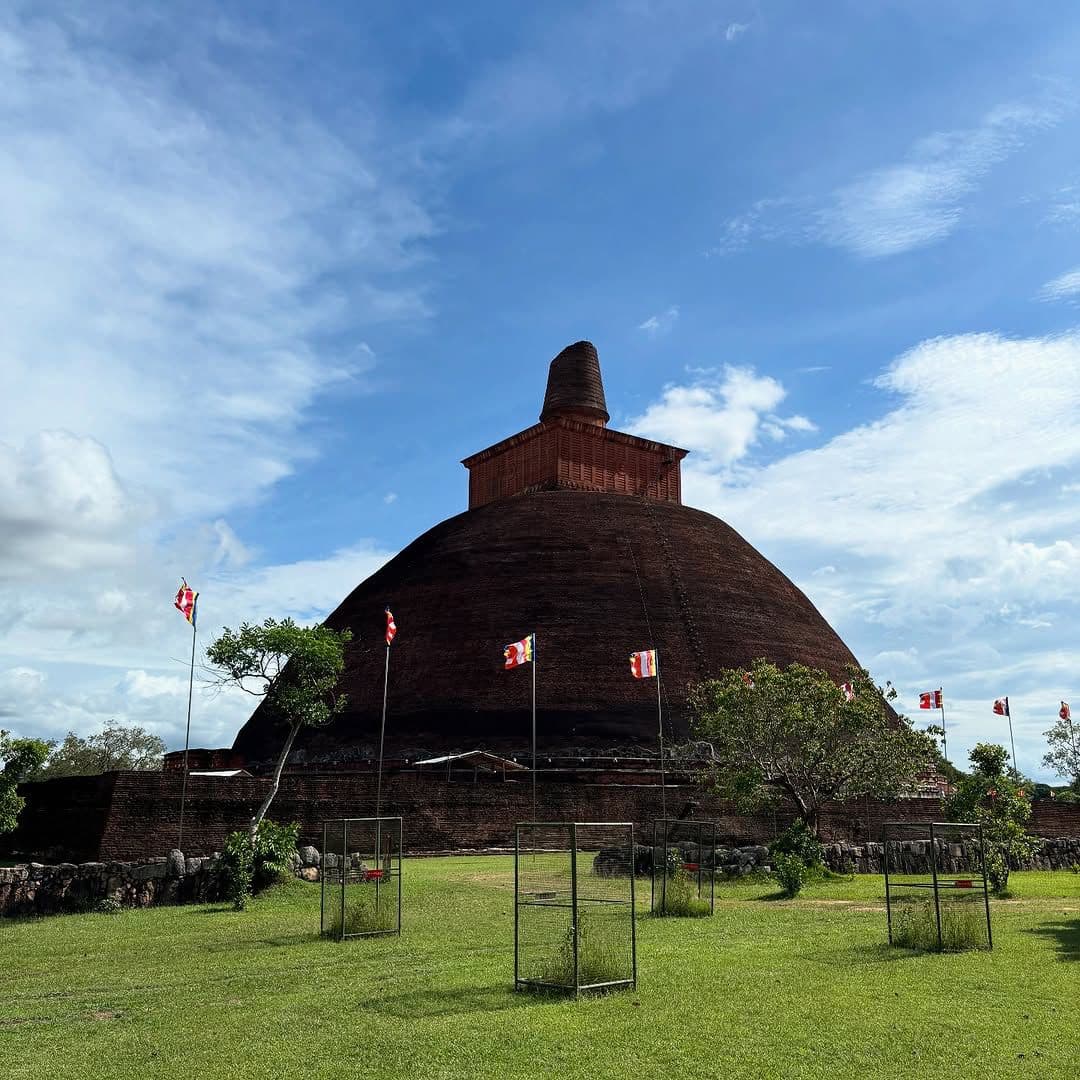
Padmakara (පද්මාකාර)
Meaning: "Like a lotus flower"
This shape looks like a lotus bud that is about to bloom. The dome is taller and more pointed than the Bubulakara. The lotus flower is very important in Buddhism because it grows from mud but produces beautiful, clean flowers. This represents how people can rise above worldly problems to reach enlightenment.
Famous Examples:
- Abhayagiri Dagoba in Anuradhapura - Second largest stupa in Sri Lanka
- Rankot Vehera in Polonnaruwa - The largest stupa in Polonnaruwa
The Abhayagiri stupa shows this design beautifully. Its dome rises higher and comes to a more elegant point, just like a lotus bud reaching towards the sky.
Did You Know?
Ancient Sri Lankan builders used a special technique where they placed a crystal or gem at the very top of the stupa. This was believed to spread positive energy in all directions. Some stupas still have these crystals today!
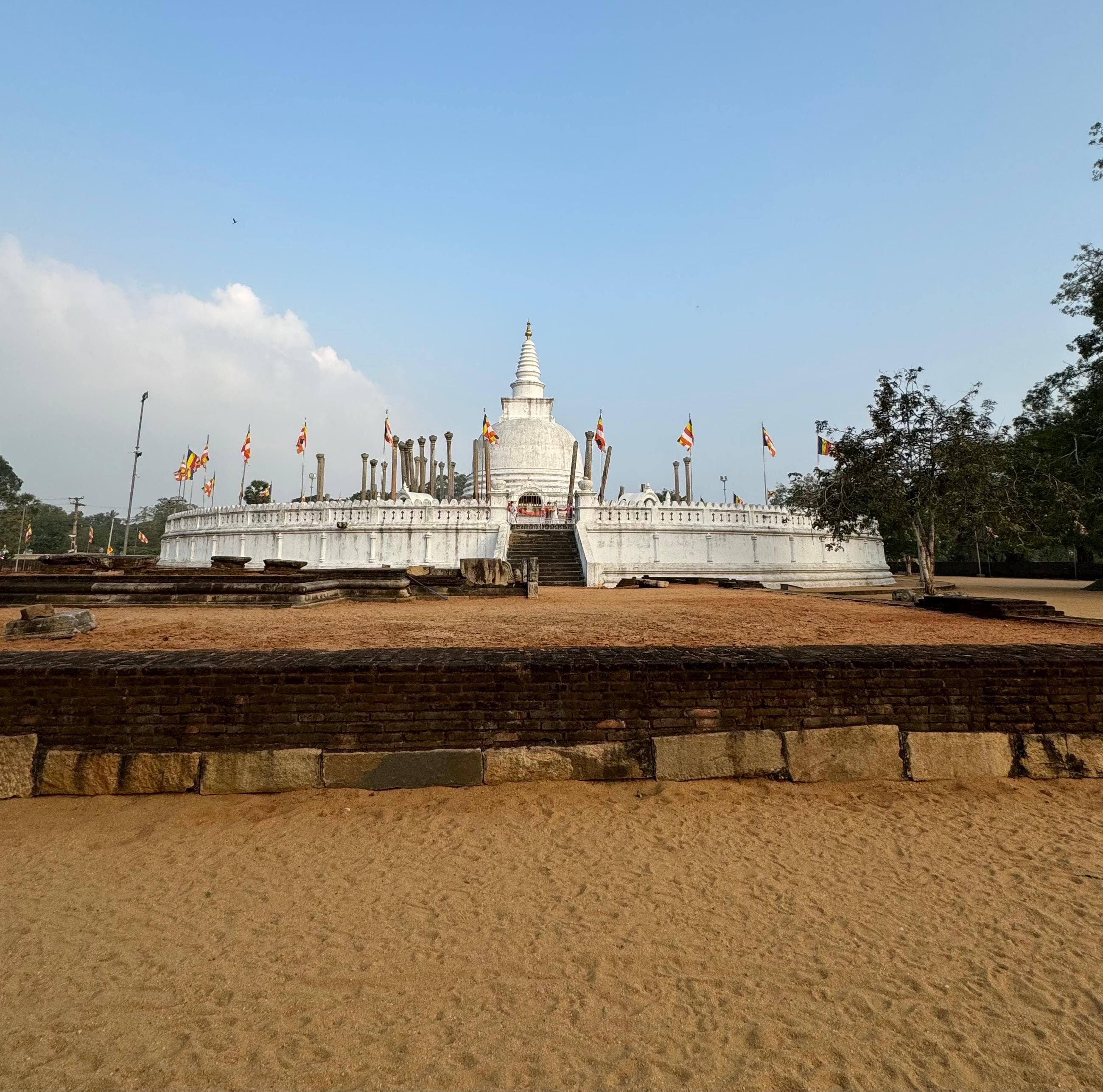
Ghandakara (ඝණ්ඩාකාර)
Meaning: "Like a bell" (also called Bellakara)
This stupa shape looks like an upside-down bell. The dome has a distinct shoulder or curve, then narrows towards the top. This shape became popular during the later periods of Sri Lankan history, especially in the Polonnaruwa era (11th-13th centuries).
Famous Examples:
- Thuparamaya in Anuradhapura - The oldest stupa in Sri Lanka (rebuilt in bell shape)
- Kiribath Vehera in Polonnaruwa
- Somawathiya Chaitiya - Located in a national park
The bell shape is easy to recognize because of its strong shoulder curve. When you see a stupa with this distinct curve, you know it was likely built or restored during the medieval period of Sri Lankan history.

Amalakara (ආමලකාර)
Meaning: "Like an Amalaka fruit" (Indian gooseberry or Nelli fruit)
This is a rare shape that looks like the Indian gooseberry fruit. The dome is rounded but has a slightly flattened appearance, similar to the fruit when viewed from the side. This shape is less common in Sri Lanka compared to other shapes.
Characteristics:
- Slightly flattened dome compared to the Bubulakara shape
- Gentle curves without sharp angles
- Often found in smaller stupas and relic chambers
Did You Know?
Buddhist monks walk around stupas in a clockwise direction as a form of meditation and respect. This practice is called "pradakshina" and helps calm the mind while showing devotion to the Buddha's teachings.

Dhatukara (ධාතුකාර)
Meaning: "Like a relic casket" (also called Garbhakara)
This shape resembles the small boxes or caskets used to store sacred relics. It has a squared or cylindrical base with a dome on top. This design is based on the actual containers that hold Buddha's relics inside the stupa.
Characteristics:
- Combination of rectangular and curved elements
- Often used for smaller stupas or relic chambers
- Represents the sacred container holding Buddha's relics
While this is the least common of the five shapes for large stupas, you can often see this design in smaller structures within temple complexes.
Did You Know?
When stupas are built, the foundation includes special protective charms and inscriptions written on gold or silver plates. These were placed to protect the stupa and ensure it lasts for thousands of years. Many of these plates have been discovered during restoration work!
Why Are There Different Shapes?
The different shapes of stupas evolved for several reasons:
1. Time Periods
Earlier stupas (before 5th century AD) were mostly Bubulakara shape. Later periods introduced Padmakara and Ghandakara shapes as architectural skills improved.
2. Regional Influences
Contact with India and Southeast Asia brought new design ideas. Kings and architects adapted these to create uniquely Sri Lankan styles.
3. Religious Meanings
Each shape emphasizes different Buddhist teachings. The lotus shape focuses on purity and enlightenment, while the rice heap shape represents abundance and merit.
4. Royal Preferences
Different kings had their favorite designs. King Parakramabahu I preferred the bell shape, while earlier kings like Dutugemunu chose the rice heap form.
Tips for Visiting Stupas
Dress Code
Wear modest clothing covering shoulders and knees. White clothing is preferred but not required.
Remove Footwear
Take off shoes and hats before entering temple grounds. Socks are usually okay.
Photography
Photos are allowed in most places, but never pose with your back to the Buddha statue or stupa.
Best Time
Visit early morning or late afternoon to avoid heat. Sunrise and sunset offer beautiful lighting for photos.
Show Respect
Walk clockwise around stupas. Don't point your feet towards the stupa when sitting.
Entrance Fees
Ancient cities like Anuradhapura and Polonnaruwa charge entrance fees. Some temple stupas are free.
Did You Know?
The construction of Ruwanwelisaya required the labor of thousands of workers. According to ancient texts, King Dutugemunu provided free meals to all workers - feeding up to 10,000 people daily! This was one of the largest construction projects in ancient Asia.
Final Thoughts
The stupas of Sri Lanka are not just religious monuments - they are masterpieces of ancient engineering and symbols of the island's rich Buddhist heritage. Each shape tells a story about the time it was built, the king who commissioned it, and the spiritual beliefs of the people.
Whether you're a history lover, architecture enthusiast, or spiritual seeker, visiting these stupas offers a unique glimpse into Sri Lanka's glorious past. The five main shapes - Bubulakara, Padmakara, Ghandakara, Amalakara, and Dhatukara - each have their own beauty and meaning.
When you visit these ancient structures, take time to walk around them slowly. Notice the perfect curves of the dome, the intricate carvings, and the peaceful atmosphere. These stupas have stood for over two thousand years, and they continue to inspire wonder in everyone who sees them.
Must-Visit Stupas by Shape
For Bubulakara Shape:
- •Ruwanwelisaya, Anuradhapura - The perfect example, gleaming white and beautifully restored
- •Kiri Vehera, Polonnaruwa - Smaller but perfectly preserved
For Padmakara Shape:
- •Abhayagiri, Anuradhapura - Massive and impressive, though partially ruined
- •Rankot Vehera, Polonnaruwa - Well-maintained and easily accessible
For Ghandakara (Bell) Shape:
- •Thuparamaya, Anuradhapura - The oldest stupa in Sri Lanka, restored in bell shape
Did You Know?
Sri Lanka has more than 5,000 stupas across the island! While the famous ones are in Anuradhapura and Polonnaruwa, you can find beautiful stupas in almost every town and village. Some tiny village stupas are over 1,000 years old and still in active use.